
The Year Ahead: 5 Predictions for Creative Intelligence in 2026



Every December, marketing predictions flood in. Most of them are variations of the same themes: "AI will transform everything," "Video will dominate," "Personalization is key."
Here's what most prediction pieces miss: they focus on what's possible rather than what's actually happening, they hype technology without considering how marketing teams actually work, and they ignore the biggest shift already underway—the move from creative guesswork to creative intelligence.
We're not here to guess what might happen. These predictions are based on patterns we're already seeing with brands that have moved beyond traditional creative workflows. Some of these shifts will feel uncomfortable. Others will seem obvious in hindsight. But all of them will separate the brands that adapt from those still running campaigns like it's 2019.
1. Creative intelligence becomes the key to media efficiency
Most brands still think media efficiency is about targeting, placements, and bidding. By mid-2026, marketers will realize creative quality is the lever they can truly control.
Platforms have said this for years—Meta attributes 50%+ of performance to creative—yet many teams still treat creative as the final step. In 2026, that's changing.
Brands getting the lowest CPMs aren't spending more on media; they're systematically testing creative, learning what drives engagement, and reinvesting based on insight.
What this means: CFOs will shift questions from "How much are we spending on creative?" to "How is creative reducing our media costs?" Teams with data-backed answers get budget, those without lose it.
Why it matters: When creative intelligence becomes your differentiator, testing isn't optional—it's how you stay efficient while costs rise everywhere else.
2. The "one big campaign idea" model collapses
The classic approach where one big concept rolled out everywhere can't keep up with audiences that shift weekly or platforms that reward constant novelty.
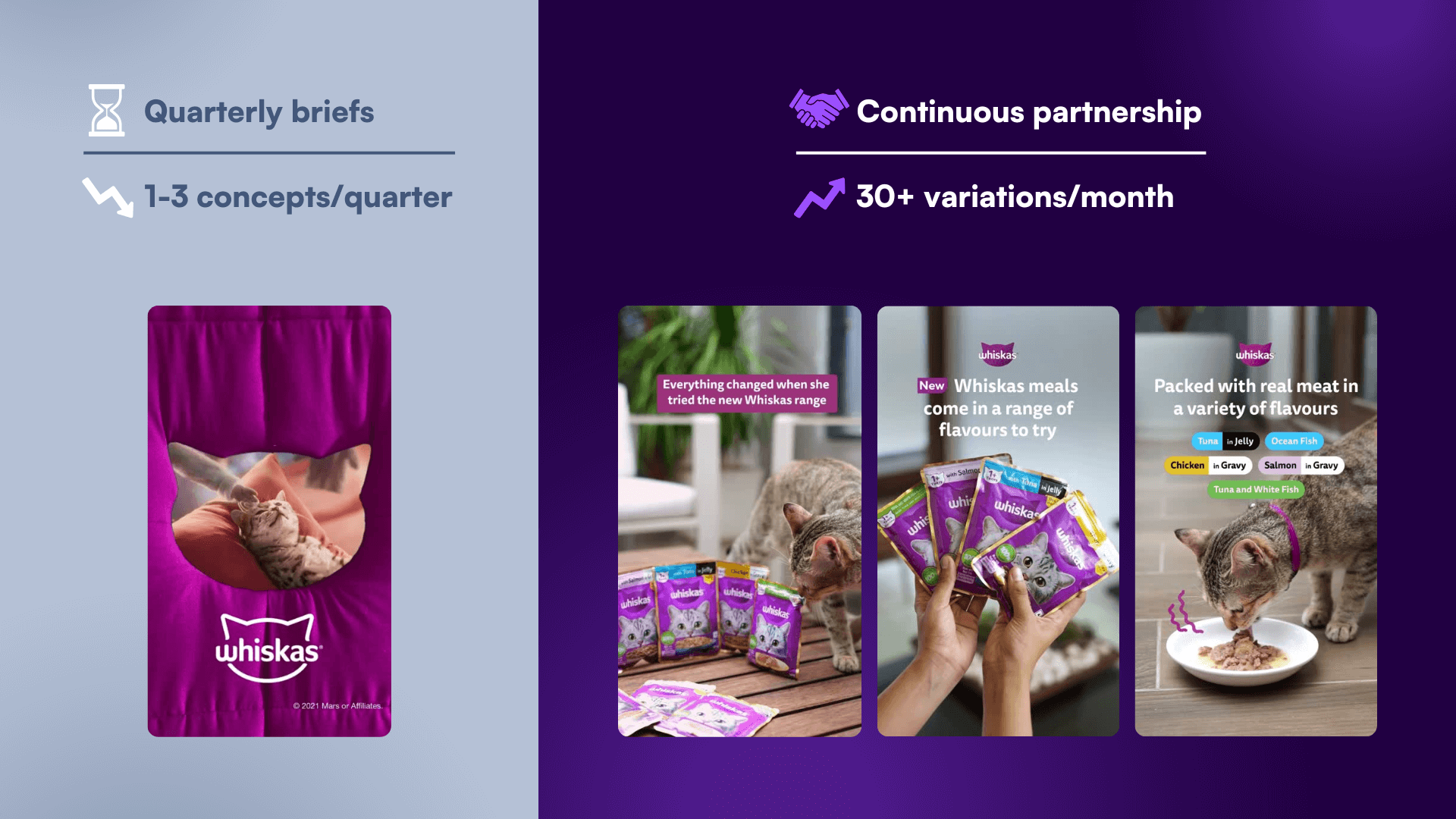
By 2026, more brands will accept that quarterly campaign cycles are too slow. Winners won't build campaigns; they'll build creative systems that learn and evolve continuously.
This isn't about abandoning brand consistency. It's about replacing "launch and hope" with "test and evolve."
What this looks like: Your Q1 isn't a campaign—it's a series of structured tests: hooks, angles, creator styles. January's winners evolve into February's. Underperformers are replaced immediately.
Why it matters: Brands clinging to campaign thinking will keep burning money on creative that doesn't work. Brands with always-on systems will learn faster and waste less.
3. Internal teams will partner with specialized networks
By 2026, the highest-performing teams will adopt a hybrid structure: in-house strategists and analysts paired with specialized networks for scalable, platform-native production.
This isn't outsourcing, it's accessing capabilities that don't make sense to build internally. Most brands shouldn't become experts in TikTok culture or IG algorithm nuance. They need partners who already are.
What changes: Instead of briefing agencies quarterly, teams will build ongoing production partnerships. Creative briefs become continuous. Feedback loops shrink from weeks to days. Learning compounds.
Why it matters: Some brands will test 30 creative variations a month. Others will still be waiting for their first campaign to finish production. The gap will be impossible to miss.
4. Performance data will redefine what "on-brand" means
Today, "on-brand" is defined by internal rules such as tone, visuals, approved messaging. By 2026, leading brands will let performance data inform those standards.
This doesn't mean sacrificing brand integrity. It means recognizing when guidelines limit performance and evolving accordingly.
We're already seeing the shift: lo-fi creator content often beats studio production; conversational beats formal; benefit-led beats credential-led.
So if something performs dramatically better while maintaining brand recognition—is it off-brand, or is your definition outdated?
What this looks like: Brand guidelines become living documents that evolve based on audience response. Creative reviews ask both: Does it meet brand standards? What does the data say audiences prefer?
Why it matters: Brands clinging to pre-digital guidelines will keep producing polished work that underperforms. The ones evolving based on evidence will pull ahead.
5. Creative analytics become as critical as media analytics
Media analytics are sophisticated. Creative analytics are still mostly gut feel.
By 2026, top-performing brands will build creative intelligence systems as robust as their media systems. They'll understand which creative elements drive performance and why.
This means moving beyond "Did it work?" to "Which elements worked for which audience on which platform?"
What this enables:
- Insights that compound across campaigns
- Creative decisions grounded in patterns, not opinions
- Frameworks that produce repeatable wins instead of lucky ones
Why it matters: Brands with creative intelligence systems will get better every campaign. Those without will keep reinventing the wheel.
What these predictions mean for 2026 planning
These shifts aren't hypothetical, they're happening now inside teams that have moved beyond traditional workflows. The question is whether your team adapts deliberately or reacts late.
As you plan 2026, ask:
- Can your creative process support continuous testing, or are you stuck in quarterly cycles?
- Do you have partners that enable fast creative scaling?
- Are you measuring creative effectiveness systematically—or only through end results?
- Is your definition of "on-brand" helping performance or limiting it?
Brands that answer honestly—and evolve accordingly—won't just keep up. They'll pull ahead.
2026 won't be about bigger budgets or better technology. It'll be about smarter creative systems.The teams that build them first will win.



%20(1).png)
%20(1).png)


